


Welcome to a sneak peek of the Sovereign Finance Guide, a new free publication launching every other Monday starting October 5th. For each guide, I'll walk you through what happened in digital assets, liquidity, and regulation, why it matters, and what I'm watching next, in a 5 to 10 minute read written for readers new to this world and longtime market watchers alike.
This is a preview before the official launch, so I'd love to hear what you think in the comments.
SOVEREIGN SNAPSHOT
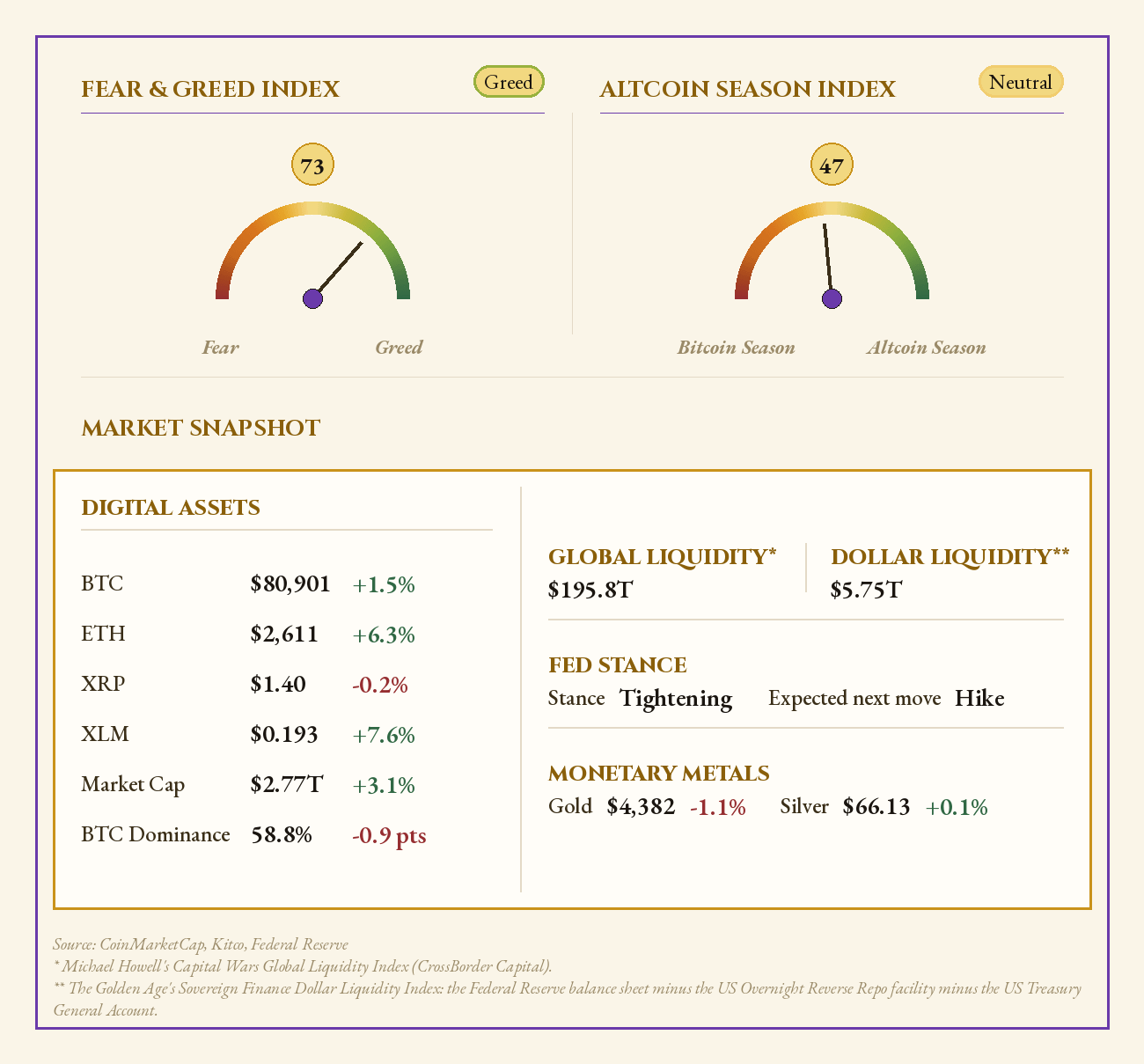
Market prices as of Friday, Sept 18, 2026 close
What It Means
Over these two weeks, digital assets ended close to where they started, even with heavy news. The Fear & Greed gauge sits in greed, meaning buyers felt confident rather than nervous. The Altcoin Season gauge sits right in the middle. Altcoins are any digital assets other than Bitcoin, and a middle reading suggests money wasn’t rushing out of Bitcoin and into them.
Liquidity is the amount of money available to flow into markets. Global Liquidity is Michael Howell’s estimate of that money worldwide. Dollar Liquidity is our own simpler measure: the money the Federal Reserve has put into the U.S. financial system, minus cash parked at the Fed where it isn’t circulating, such as the government’s own checking account. This is the first time you’re seeing these two numbers here, so starting with Guide #1 you’ll be able to watch them rise or fall from issue to issue.
A Fed stance of tightening means the Federal Reserve is making borrowing more expensive to cool inflation. That tends to leave less money chasing assets like crypto, which makes it worth noticing that prices held steady even with less capital available. Gold and silver barely moved, suggesting people weren’t running for shelter either.
✦✦✦
THE BIG PICTURE
On Tuesday, September 15, the Senate blocked the CLARITY Act, the bill meant to write clear rules for digital assets. The next day, the Federal Reserve raised interest rates for the first time in more than three years and signaled more hikes may follow. Within 48 hours of the Senate vote, the SEC and CFTC stepped into the gap with their own rules and exemptions.
Money got more expensive, and the crypto rulebook moved from Congress to the regulators. Bitcoin dipped to about $75,400, then recovered and finished the stretch close to where it began. The market absorbed both.
WHAT CHANGED
Markets
Bitcoin dips, then recovers
Bitcoin fell to about $75,400 on September 16, the day of the Fed decision. By September 18, it had climbed back above $81,000. Ether followed a similar path and finished the window about 6% higher.
Macro & Liquidity
The Fed raises rates
The Federal Reserve raised its benchmark rate by a quarter point, to a range of 3.75% to 4%. It was the first hike since July 2023, and the vote was 12 to 0. Sixteen of 18 officials projected at least one more increase this year.
Inflation holds at 3.4%
Consumer prices rose 0.4% in August and 3.4% over the past year. Gasoline accounted for more than a third of the monthly increase.
Japan raises rates too
The Bank of Japan raised its policy rate to 1.25% on September 18, its highest level since 1995. The vote was 7 to 2..
Regulation
The CLARITY Act is blocked
The Senate voted 49 to 50 on September 15 on a motion to begin debate on the CLARITY Act, well short of the 60 votes needed. The dispute centered on ethics rules for government officials’ crypto holdings (mainly Trump and family). No Democrat voted to advance the bill.
The SEC and CFTC act
On September 17, the SEC approved a five-year exemption that lets approved venues trade blockchain-based versions of U.S.-listed stocks. The same day, the CFTC issued relief for certain software providers and filed draft crypto trading rules for White House review.
WHY IT MATTERS
Resilience under pressure. Digital assets took a rate hike and a legislative defeat in the same week and held their ground. That suggests much of the bad news was already expected.
Money is getting tighter. Two major central banks raised rates in the same week, and the Fed signaled more to come. That is the backdrop to watch through the end of the year.
The rulebook has moved. Congress stalled, but the regulators did not. For now, agencies will set the rules for digital assets, and agency rules can change with the next administration in a way a law cannot.
✦✦✦
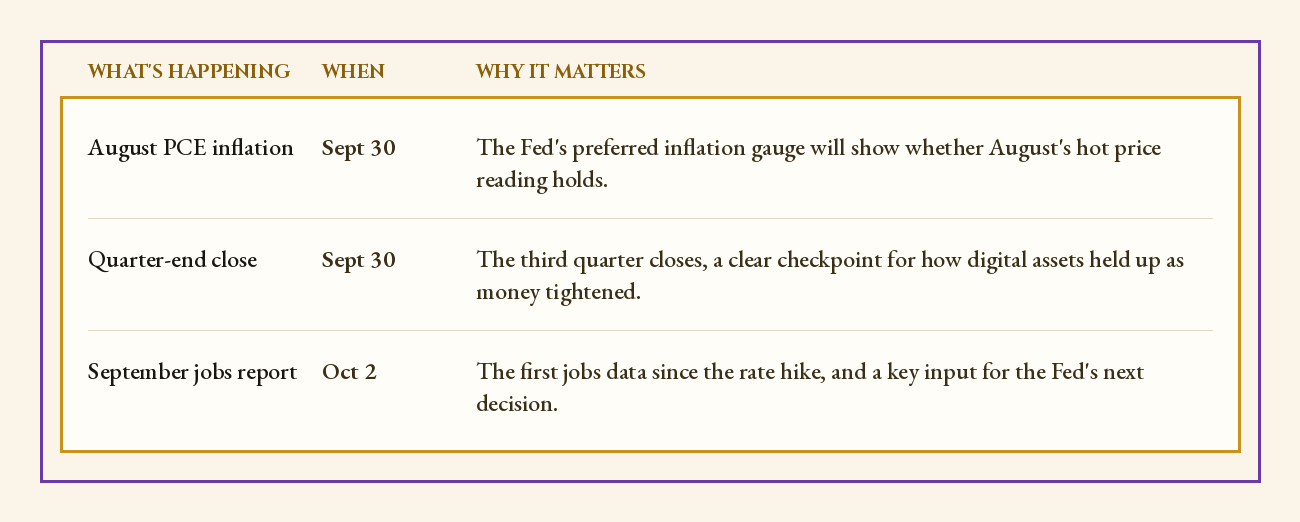
CALENDAR AHEAD
ONE THING WORTH KNOWING
An interest rate is the price of money. When that price rises, money tends to move away from riskier assets, which is why a Fed hike matters to your digital assets even when the headlines are about mortgages and car loans.
THE SOVEREIGN VIEW
The rules for your money are being written right now, just not where many people expected. When Congress stalls, government agencies step in. Their rules are useful, but easier to undo.
The investment plan stays the same. Hold what you understand, keep your long-term holdings in your own custody, and let the rules settle before you act.
A note on this Sneak Peek
You’re reading a preview. The Sovereign Finance Guide officially launches Monday, October 5, with Guide #1, and arrives every other Monday after that. I’d love to know what you think.
Tell me in the comments: one thing that would make this Guide more useful to you?
Until next time, stay Sovereign.
In Light and Service,
Kelly Sunshawl

I will add a note under the graphics to click on them to enlarge for better viewing.